Vol. 1  ·  Issue 1  ·  2025 — 2026 | ISSN: 0000-0000 (Online) | Open Access  ·  Peer Reviewed | Now Accepting Submissions
[JRB]
Journal of Replicable Bioscience
Rigorous science. Reproducible results.
ISSN 0000-0000 · Est. 2025
Open Access Double-Blind Peer Review

Call for Papers — Volume 1, Issue 1

Science deserves to be verified, not just celebrated.

The Journal of Replicable Bioscience publishes scientifically sound, methodologically rigorous work across the life sciences—including replication studies, null results, and research that challenges the status quo of novelty-bias in biological, biomedical, and health-related publishing.

Introductory issue notice: submissions are welcomed with a full APC waiver for Volume 1, Issue 1. Last date of submission: 15 August 2026.

Submit Your Manuscript → Learn More
10+
Life Sciences Sub-fields
21
Days Avg. Review Time
Full
Introductory APC Waiver
100%
Open Access

Addressing a systemic gap in scientific publishing

The Journal of Replicable Bioscience (JRB) was founded to address a persistent and well-documented crisis in life sciences publishing: the systemic undervaluation of reproducibility, methodological rigor, and transparency.

Publication bias—the tendency to publish only novel or statistically significant findings—has long distorted the scientific record in biology, medicine, ecology, and related fields. JRB exists to correct that. We provide a rigorous, respected venue for life sciences work that might otherwise go unnoticed: replication attempts, carefully null results, and well-designed studies that advance knowledge regardless of their headline findings.

We believe that life sciences progress not through exciting surprises alone, but through the steady accumulation of verified, reproducible knowledge across all branches of biology and biomedicine.

Mission Statement

"To provide a credible, rigorous, and transparent venue for scientific work that prioritizes methodological quality, reproducibility, and honest reporting over novelty or statistical significance."


Publisher

Journal of Replicable Bioscience is an independent scientific publication committed to open-access dissemination of life sciences research.

What we publish — and what we do not

JRB is dedicated exclusively to the life sciences and their sub-disciplines. We evaluate manuscripts on the quality of their design, methods, and reporting — not on the magnitude or direction of their results.

🧬 Molecular & Cell Biology

Genetics, genomics, proteomics, cell signalling, epigenetics, molecular mechanisms of disease

🏥 Biomedical Sciences

Pharmacology, pathology, clinical trials, translational research, diagnostics, drug discovery

🧠 Neuroscience

Cognitive neuroscience, neurophysiology, neuropharmacology, brain imaging, neurological disorders

🌿 Ecology & Evolution

Population biology, evolutionary genetics, ecosystem science, conservation biology, ethology

🦠 Microbiology & Immunology

Virology, bacteriology, mycology, host-pathogen interactions, vaccine science, immunotherapy

🌾 Plant Biology

Plant physiology, plant genetics, crop science, photosynthesis, plant-microbe interactions

🔬 Biochemistry & Biophysics

Enzyme kinetics, structural biology, membrane biology, metabolomics, systems biology

🧪 Biotechnology & Synthetic Biology

Gene editing, CRISPR, bioengineering, synthetic pathways, biomaterials, fermentation science

🫀 Physiology & Anatomy

Human and comparative physiology, organ systems, developmental biology, histology

🌍 Environmental & Marine Biology

Marine biology, environmental toxicology, climate impacts on biodiversity, freshwater ecology

✓  We Welcome

  • Replication and reproduction studies in life sciences
  • Methodologically sound research across life sciences sub-fields
  • Well-documented experimental and observational studies
  • Pre-registered studies and registered reports
  • Methods papers and validation studies in biology & biomedicine
  • Open data and open-code life sciences manuscripts

✗  We Do Not Consider

  • Manuscripts outside the life sciences (physics, social sciences, engineering, etc.)
  • Poorly designed or irreproducible studies
  • Manuscripts lacking methodological detail
  • Unethical, plagiarized, or fabricated work
  • P-hacked or outcome-switched analyses
  • HARKing (Hypothesizing After Results are Known)
  • Duplicate or redundant publications

A platform built for science that lasts

⚖️

Fair & Unbiased Review

Double-blind peer review with reviewers selected for methodological expertise, not field prestige. Results do not influence acceptance decisions.

⏱️

Fast Review Timelines

Initial editorial decision within 7 days. Full peer review completed within 21 days. Authors receive structured, actionable reviewer feedback.

🌐

Open Access

All published articles are freely available immediately upon publication. The introductory issue carries a full APC waiver for submissions received by 15 August 2026; standard APC details are available for Indian and international authors.

🔬

Life Sciences Focus

Dedicated exclusively to the life sciences: molecular biology, biomedical research, neuroscience, ecology, microbiology, biotechnology, and related sub-disciplines.

Transparent, structured, rigorous

Every manuscript submitted to JRB undergoes a clearly defined, multi-stage evaluation process designed for fairness, speed, and scientific integrity.

1
Submission
Author submits manuscript with reproducibility checklist, data availability statement, and conflict-of-interest disclosure.
2
Editorial Screening
Editor-in-chief reviews for scope fit and minimum methodological standards. Decision within 7 business days.
3
Double-Blind Review
Two or more expert reviewers evaluate methodology, reproducibility, and reporting quality — not novelty or results.
4
Revision & Decision
Structured reviewer feedback is shared with authors. Revisions reviewed within 14 days. Final decision communicated promptly.
5
Publication
Accepted articles are assigned a DOI and published in open-access format, indexed and permanently archived.

Led by experts in reproducibility & methodology

Dr. Shubha Anand
Editor-in-Chief
Dr. Shubha Anand
Ex. Lecturer, Department of Botany, Dayalbagh Educational Institute, Agra 282005, India
ORCID

Dr. Sharmita Gupta
Associate Editor
Dr. Sharmita Gupta
Assistant Professor, Department of Botany, Faculty of Science, Dayalbagh Educational Institute, Agra 282005, India
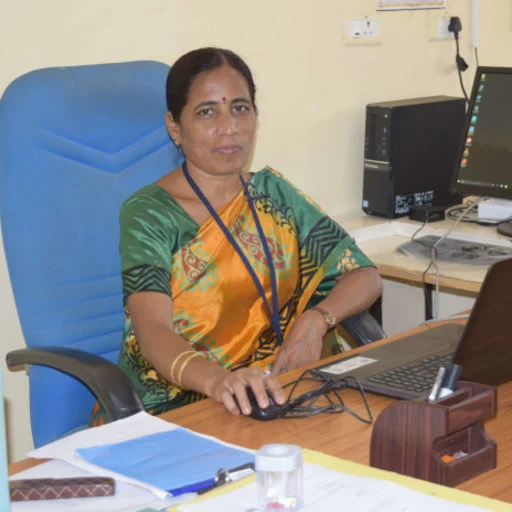
Dr. T.R. Rupa
Associate Editor
Dr. T.R. Rupa
Principal Scientist (Soil Science), Division of Natural Resources, ICAR-IIHR, Bangalore 560089, India
ORCID

Dr. Ishwar Chandra
Statistical Review Editor
Dr. Ishwar Chandra
Assistant Professor, Department of Biotechnology, Sir M. Visvesvaraya Institute of Technology (Sir MVIT), Bangalore 562157, India

Advisors supporting journal governance and development

CA. Rishi Kapoor
Financial Advisor
CA. Rishi Kapoor
Head of Finance at GEW (India) Private Limited

Dr. Shivakumar Kandekar
Scientific Advisor
Dr. Shivakumar Kandekar
Assistant Professor, Department of Higher and Professional Education, National Institute of Educational Planning and Administration (NIEPA), Ministry of Education, Government of India, 17-B, Sri Aurobindo Marg, New Delhi 110016, India

Interested in joining the editorial board? Contact us at jrb.editor@gmail.com with your CV and areas of expertise.

Our commitment to integrity

JRB adheres to the highest standards of research and publication ethics. All submissions, reviews, and editorial decisions follow internationally recognized guidelines.

COPE Compliance

All editorial processes follow guidelines from the Committee on Publication Ethics (COPE), including handling of misconduct, corrections, and retractions.

Data Availability

Authors are strongly encouraged to share underlying data, analysis scripts, and materials in open repositories (OSF, Zenodo, GitHub) upon submission.

Conflict of Interest

All authors, reviewers, and editors must declare competing interests. Undisclosed conflicts of interest are treated as research misconduct.

Plagiarism Detection

All manuscripts are screened with plagiarism detection software prior to peer review. Suspected misconduct is investigated according to COPE procedures.

Authorship Standards

JRB follows ICMJE criteria for authorship. All listed authors must have made substantial contributions to design, execution, or interpretation.

Corrections & Retractions

Errors identified post-publication are corrected transparently. Retractions are issued when findings are found to be unreliable or unethical.

📢   JRB is now accepting submissions for Volume 1, Issue 1. Be part of the reproducibility movement.

Submit Now →

Manuscript Submission Enquiry

Or email directly: jrb.editor@gmail.com

Submit your rigorous research

JRB invites life scientists, researchers, and practitioners to submit original manuscripts demonstrating methodological rigor and reproducible findings across all branches of the life sciences.

📋

Manuscript Requirements

Submissions must include a reproducibility checklist, data availability statement, and full methodological detail sufficient to replicate the study.

A

Authors

Review the complete formatting requirements for font size, spacing, structure, references, figures, tables, and supplementary files before submission.

🌍

Language

Manuscripts must be submitted in English. We recommend professional editing for non-native speakers prior to submission.

📂

File Formats Accepted

PDF, DOCX, or LaTeX (.zip). Figures should be submitted as separate high-resolution files (300 DPI minimum).

📧

Direct Email Submission

jrb.editor@gmail.com
Include "JRB SUBMISSION" in the subject line.